|
|
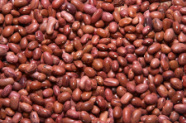 With a little guidance and some helpful tips it is possible to not have to spend a fortune to eat a healthy, balanced diet. In fact an authentic, traditional Mediterranean diet is a nutritious and balanced diet to follow for life.
The traditional Mediterranean diet consists of fruit and vegetables, carob, honey, whole grains, beans and other pulses, fish, eggs, goat’s cheese, yoghurt, virgin olive oil, garlic, onions and herbs, wild edible plants and mushrooms, nuts and seeds, red meat is eaten once a week and let’s not forget that glass of red wine. Foods made from refined sugar and grains such as white bread, cakes, cookies and pastries are consumed in very small amounts. All for a healthier weight, less belly fat, and a lower risk for heart disease, stroke, high blood pressure, diabetes and cancer. There have been recent studies claiming healthy food is only for the rich, this can make sense when you visit the health food shop and find yourself with a three-figure bill starring at you as you had happened to add in wild-caught fish, grass-fed beef and organic cheeses, eggs and a couple of healthy bars. For more realistic measures and economical buys for healthy eating and living, here are a couple of tips to follow:
2. Shop for powerfood bargains. These may include:
3. Be choosy about produce. Local, in-season is riper and tastier and costs less than buying out of season. Fruit and veg is more expensive at the beginning of it’s season and then towards the middle or end it becomes more plentiful and is cheaper to buy. Farmer’s markets is another place to hang out at. There you can buy large quantities of fruits, vegetables and other home made items such as whole grain breads, cheeses and wines. 4. Organic or grow your own: Fruit and vegetables that would be worth growing your own or buying organic due to the high pesticide levels are: apples, celery, strawberries, peaches, spinach (or most leafy green vegetables such as lettuces, fresh coriander, Swiss chard etc), nectarines, grapes, sweet bell peppers, potatoes. 5. Sweet treats: Dark chocolate, fruits, healthy bars, honey and walnuts, dried fruits. 6. Studies show that you’ll make 30 per cent fewer unhealthy, impulse buys at the supermarket if you go shopping after a meal and pay with cash. So make sure to go shopping on a full stomach and cash in your wallet !
14 Comments
New Evidence That Natural Substances in Green Coffee Beans Help Control Blood Sugar Levels
Scientists described evidence that natural substances extracted from unroasted coffee beans can help control elevated blood sugar levels and body weight that underpin type 2 diabetes. The Scent of Rosemary May Help Improve Your Memory. The aroma of rosemary essential oil may improve prospective memory in healthy adults. It was found that this essential oil may enhance the ability to remember events and to remember to complete tasks at particular times in the future. Couch Potatoes May Be Genetically Predisposed to Being Lazy, Rat Study Suggests Studies show 97 percent of American adults get less than 30 minutes of exercise a day, which is the minimum recommended amount based on federal guidelines. New research from the University of Missouri suggests certain genetic traits may predispose people to being more or less motivated to exercise and remain active. Frank Booth, a professor in the MU College of Veterinary Medicine, along with his post-doctoral fellow Michael Roberts, were able to selectively breed rats that exhibited traits of either extreme activity or extreme laziness. They say these rats indicate that genetics could play a role in exercise motivation, even in humans. Sustained Stress Heightens Risk of Miscarriage Several studies have examined the impact of stress on a pregnancy both chronic stress, such as workload, and acute stress associated with traumatic events like the 9/11 terrorist attacks. They conclude that stress can lead to adverse birth outcomes, including miscarriage and premature birth. Following the pregnancies of women from the Israeli town of Sderot, which is constantly under threat of rocket bombings from Gaza, and women from nearby Kiryat Gat, which is outside of Gaza's rocket range, the researchers demonstrated that those living under rocket fire were 59 percent more likely to miscarry than their neighbors. New Link Between Heart Disease and Red Meat: New Understanding of Cardiovascular Health Benefits of Vegan, Vegetarian Diets A compound abundant in red meat and added as a supplement to popular energy drinks has been found to promote atherosclerosis -- or the hardening or clogging of the arteries -- according to Cleveland Clinic research published online this week in the journal Nature Medicine. The study shows that bacteria living in the human digestive tract metabolize the compound carnitine, turning it into trimethylamine-N-oxide (TMAO), a metabolite the researchers previously linked in a 2011 study to the promotion of atherosclerosis in humans. Further, the research finds that a diet high in carnitine promotes the growth of the bacteria that metabolize carnitine, compounding the problem by producing even more of the artery-clogging TMAO. The study tested the carnitine and TMAO levels of omnivores, vegans and vegetarians, and examined the clinical data of 2,595 patients undergoing elective cardiac evaluations. They also examined the cardiac effects of a carnitine-enhanced diet in normal mice compared to mice with suppressed levels of gut microbes, and discovered that TMAO alters cholesterol metabolism at multiple levels, explaining how it enhances atherosclerosis. The researchers found that increased carnitine levels in patients predicted increased risks for cardiovascular disease and major cardiac events like heart attack, stroke and death, but only in subjects with concurrently high TMAO levels. Additionally, they found specific gut microbe types in subjects associated with both plasma TMAO levels and dietary patterns, and that baseline TMAO levels were significantly lower among vegans and vegetarians than omnivores. Remarkably, vegans and vegetarians, even after consuming a large amount of carnitine, did not produce significant levels of the microbe product TMAO, whereas omnivores consuming the same amount of carnitine did. Lift Weights to Lower Blood Sugar? White Muscle Helps Keep Blood Glucose Levels Under Control Researchers in the Life Sciences Institute at the University of Michigan have challenged a long-held belief that whitening of skeletal muscle in diabetes is harmful. In fact, the white muscle that increases with resistance training, age and diabetes helps keep blood sugar in check, the researchers showed. Widely Used Filtering Material Adds Arsenic to Beers Researchers concluded that the arsenic was released into the beer from a filtering material called kieselguhr, or diatomaceous earth, used to remove yeast, hops and other particles and give the beer a crystal clear appearance. "We concluded that kieselguhr may be a significant source of arsenic contamination in beer," Coelhan said. "This conclusion was supported by analysis of kieselguhr samples. These tests revealed that some kieselguhr samples release arsenic. The resulting arsenic levels were only slightly elevated, and it is not likely that people would get sick from drinking beers made with this filtration method because of the arsenic. The arsenic is still at low levels -- the risk of alcohol poisoning is a far more realistic concern, as stated in previous studies on the topic." Low on Self-control ? Surrounding yourself with strong-willed friends may help. "What we have shown is that low self-control individuals seem to implicitly surround themselves with individuals who can help them overcome temptation -- you get by with a little help from your friends," says Shea. This research was supported in part by the Social Science and Humanities Research Council (SSHRC) of Canada. By Mike Adams, Natural News
Many people don't investigate what's really in the products they swallow. When something is sold as an herb, vitamin, superfood or supplement, they think it's automatically safe. And while the natural products industry has a truly remarkable safety record—especially in contrast to the massive number of deaths caused by pharmaceuticals—it still suffers from a lot of hidden toxins that are routinely used throughout the industry. After reviewing this list, you will probably throw out quite a few products in your refrigerator and pantry. Few people are willing to tell you the truth revealed here, so some of this may come as a complete shock (see #1 and #2, below). 1) Maltodextrin (from GM corn) If you pick up a natural product and the ingredients list says "maltodextrin," chances are very high that the maltodextrin in the product is derived from Monsanto's GM corn. Virtually all the maltodextrin used throughout the natural products industry is genetically modified. Products that are certified USDA organic, however, are not using GMO maltodextrin. Look for tapioca maltodextrin instead (or no maltodextrin at all). 2) Vitamin C “ascorbic acid” (from GM corn) Nearly all the "vitamin C" sold in vitamins across America right now is derived from GMO corn. This means that many of the supplements sold at Whole Foods, the vitamins sold on Amazon.com, the pills at your local pharmacy, and especially the products at the grocery store are (nearly) all routinely made with genetically modified vitamin C. It's typically called "ascorbic acid," and nearly 100% of the ascorbic acid used in the natural products industry is derived from GMOs. 3) Hexane-extracted soy proteins Much of the "natural" soy proteins sold in the USA are extracted in China using a hexane extraction method. Hexane is a highly explosive chemical. It is not only extremely hazardous to the environment; there may also be trace amounts of hexane left remaining in the resulting protein products. Hexane extraction, by the way, is also used in the manufacture of textured vegetable protein (TVP). 4) High levels of Aluminum in detox products Natural News helped expose high aluminum levels (over 1,200ppm) in a popular detox liquid, causing the main U.S. distributor to issue a "recall" notice and provide over $1 million in refunds to customers. The manufacturer of this product, Adya Clarity, intentionally and knowingly deceived consumers by mislabeling the product and not mentioning the 1,200ppm of aluminum it contained. The FDA seized some of the products and ran its own lab tests, confirming the high aluminum level as well as identifying multiple labeling violations. Adya Clarity is just one of many so-called "detox" products containing alarming levels of aluminum and other metals. Ingesting these in order to "detox" your body may be harmful to your health. 5) Lead and arsenic in herbs from China China is the most polluted nation on the planet (by far), yet many fruits, vegetables and herbs are grown in China and exported to North America for use in natural products. High levels of lead and arsenic are routinely found in various food, supplement and herbal products from China. I'm not concerned about 1ppm or lower, by the way, of heavy metals like lead and mercury. Even aluminum isn't necessarily a problem when found organically grown inside foods that test at higher levels such as 150ppm. But when lead, arsenic, mercury and cadmium get to high saturation levels (or are present in inorganic forms), it makes the products potentially a source of heavy metals poisoning for consumers. Astonishingly, many of the small and medium-sized companies that import and retail products from China conduct no metals testing whatsoever. 6) Inorganic minerals in cheap vitamins Would you eat iron filings and call it nutrition? The majority of people don't know that most of the cheap vitamins sold today are made with iron filings. "Scrap metal," almost. The calcium found in cheap vitamins is often just ground-up seashells, and magnesium is often sold as cheap magnesium oxide which may be completely useless to your body's cells. If you're buying mineral supplements, you may be wasting your money unless the minerals are in the right form: Magnesium orotate or malate, for example. When it comes to mineral supplements, you'll often find trace levels of scary things like barium and lead in liquid supplements, but these are typically at such low levels (ppb) that they are no real concern. But the No. 1 best source for all minerals is, not surprisingly, fresh plants. If you really want to boost your minerals, feed 'em to sprouts or garden plants, then eat or juice those plants. Your body wants "organic" minerals from plants, not inorganic minerals from rocks. 7) Carrageenan The Cornucopia Institute, a highly-effective food activism group that we've long supported, recently published a warning about carrageenan in foods. Cornucopia says carrageenan is linked to "gastrointestinal inflammation, including higher rates of colon cancer, in laboratory animals." It goes on to report: Given its effect on gastrointestinal inflammation, Cornucopia urges anyone suffering from gastrointestinal symptoms (irritable bowel syndrome/IBS, spastic colon, inflammatory bowel disease, chronic diarrhea, etc.) to consider completely eliminating carrageenan from the diet to determine if carrageenan was a factor in causing the symptoms. For the record, I definitely don't consider carrageenan to be anywhere near as worrisome as, say, aspartame, GMOs or MSG. 8) Acrylamides Acrylamides are cancer-causing chemicals produced during the cooking of carbohydrates. Fried snack chips, for example, contain acrylamides. They don't have to be listed on labels because they are technically not "ingredients." They are chemicals produced during cooking or frying. Consuming acrylamides increases kidney cancer risk by 59 percent. The FDA has published an extensive reference guide on acrylamide levels in foods, revealing that french fries have the highest levels of all. But they are also present in prune juice and even breakfast cereals. A bag of organic snack chips can have just as many acrylamides as a bag of conventional snack chips. This is why fried snack chips should be eaten only sparingly, or never at all. Interestingly, it turns out that vitamin C blocks acrylamides from causing damage to your body. But if your vitamin C is from a GMO source (see above), you may want to rethink that strategy. If you eat fried foods of any kind, make sure you ingest a lot of vitamin C, astaxanthin and chlorella before and after your meal or snack. 9) Hidden MSG / yeast extract Hidden MSG is a huge issue across the natural products industry. Pick up almost any veggie burger, and you'll find it's made with yeast extract, a hidden form of MSG (monosodium glutamate). Yeast extract is unbelievably prevalent in the food industry because it looks nicer on the label than "MSG." Most people are trained to avoid MSG, but yeast extract slips by, so food manufacturers put it into canned soups, dip mixes, snack chips, microwave dinners and especially in vegetarian products, many of which are so loaded with chemicals and additives that I won't dare touch them. Just because a food says "vegetarian" doesn't mean it's healthy. Hidden MSG is also labeled as "autolyzed yeast extract" or "torula yeast" or even "hydrolyzed vegetable protein." 10) Fluoride in green tea Green tea is famous for being contaminated with high levels of fluoride. This is frustrating, because green tea is phenomenally good for your health. It has been proven to lower "bad" cholesterol levels, and it may even help prevent cancer and neurological disorders. It's probably one of the healthiest beverages you can ever drink. The tea plant that produces green tea just happens to uptake a huge amount of fluoride from the soils. So when there's fluoride present in those soils, the green tea will have a surprisingly high concentration, sometimes as much as 25ppm. While this fluoride in green tea might not be a health hazard all by itself, the governments of the world seem insistent on pumping even more synthetic, chemical fluoride into the water supplies, thereby creating a high risk for fluorosis. The final "dirty little secret" of the natural products industry Finally, there's one more secret you need to know about. Most importers, packers, vendors and retailers of natural products foolishly trust the lab results provided by the manufacturers and exporters! So once again, buyer beware. You need to be asking for lab test results on anything from China, and it's good to ask for them on just about everything else as well. Touchstone Essentials Member: ID#13463 Whole-food nutrition harvested right from the earth, bottled, delivering 100% uncompromised goodness.  Stress
 can be seen as one of the first contributing causes of most diseases. Research continues to link stress to more and more symptoms and diseases, both acute and chronic. Stress is inevitable in today’s world and of course we need a certain amount to function. The key is to be able to manage our level of stress. What is stress ? It is our reaction to our external environment as well as our inner thoughts and feelings. Stress in essence is our body’s natural response to dangers, the “fight or flight” mechanisms – the body’s preparedness to do battle or flee from danger. Stress in today’s world is mainly a result of continuous high demands that are imposed on us by work, family, and lifestyle, or that we impose upon ourselves through our desire to accomplish. Mild stress acts as a useful motivation for activity and productivity. But when the stresses in our life are too extreme or too many, this may result in all kinds of problems. Long-term stress is dangerous. A state of continual stress eventually wears the body out. Because of its effect on immune response, stress increases susceptibility to illness and slows healing. Please realize that in most cases of stress, it is not the situations or incidents themselves, rather real stress comes from the way we react to them. Learning to create healthy mental attitudes and finding positive outlets for our stress is a very important for our long-term health and wellbeing. “Not everything that is faced can be changed; but nothing can be changed until it is faced.” – James Baldwin Natural Stress Management Recommendations
HERBS You may use these herbs individually or for a powerful anti-stress tonic, mix 1/2 teaspoon of any three of the herbs listed below and steep in 2 cups of boiling water for at least 5 minutes Alternatively you may use essential oils. These have a wonderful effect on both the mind and body. Essential oils that are particularly good for relieving stress include chamomile, Bergamot, sandalwood, lavender, and sweet marjoram. Add 10 – 20 drops of one or more of these oils to a warm bath and relax in the bath, or simply dab a couple of drops of oil on a tissue or handkerchief and inhale the aroma periodically during the day.
|
AuthorBarbara is a qualified nutritionist offering Health, Nutrition & Lifestyle Counseling. She gives Healthy weight loss advice and promotes the Mediterranean diet. She is the author of the Med Life Diet - creating healthy lifestyle habits and attitudes for life ! Archives
April 2024
|
 RSS Feed
